
THiNK Fest Website Design & Development
About the Project
New Designers is a digital agency based in The Hague, working across web development, UI/UX design, research, and branding. During my 6-month internship there, the main project I contributed to was building the THiNKFeST website from the ground up — commissioned by The Lighthouse, the in-school agency that manages all events at The Hague University.
I worked as part of a cross-functional Scrum team alongside other designers, developers, and a product owner. My contributions spanned research, UX design, and usability testing — with a particular focus on the event registration flow, the event calendar, and the homepage.
Design Process
Since the website was being built from scratch, there was no broken product to fix — there was a blank canvas to fill. That comes with its own challenges. We had to define the right features, the right flows, and the right structure before a single screen was designed. Everything started with research — understanding who we were building for, what they needed, and where existing solutions fell short.
Research
Our research phase covered a wide range of methods — stakeholder interviews, user interviews with students and professors, surveys, competitive analysis, usability testing, card sorting, A/B testing, desk research, focus groups, and contextual inquiry. Each method served a different purpose, and together they gave us a well-rounded picture of what the platform needed to be.
The platform had to work for everyone — from tech-savvy students to professors who rarely touch digital tools.
The most important insight that emerged: event registration had to be simple, clear, and error-proof. The festival draws a wide range of participants — from tech-savvy students to professors who rarely interact with digital tools. The experience had to work for everyone.
Ideation
With the research findings in hand, we moved into ideation — running sessions with both the client and potential users to explore solutions together. Working in Scrum, we broke the work into user stories and prioritised the backlog sprint by sprint, making sure we were always building what mattered most first.
One of the most important features we identified early on was the event registration flow. With events being a core requirement of the platform — administrators adding events via CMS, users registering through the website, and organisers needing headcount data — this flow had to be airtight.
Prototyping
So clear that no instruction is needed — that was the bar we set for ourselves.
Alongside the registration flow, I collaborated with a teammate on the event calendar and the homepage — two other central pieces of the platform that required their own rounds of wireframing, feedback, and iteration.
Testing
Testing wasn't a phase — it was woven into every sprint. As we worked through each component, we tested continuously with a diverse group: students, professors, the client team at The Lighthouse, and our colleagues at New Designers. A/B testing helped us make decisions with confidence rather than opinion, and each round of feedback shaped the next iteration.
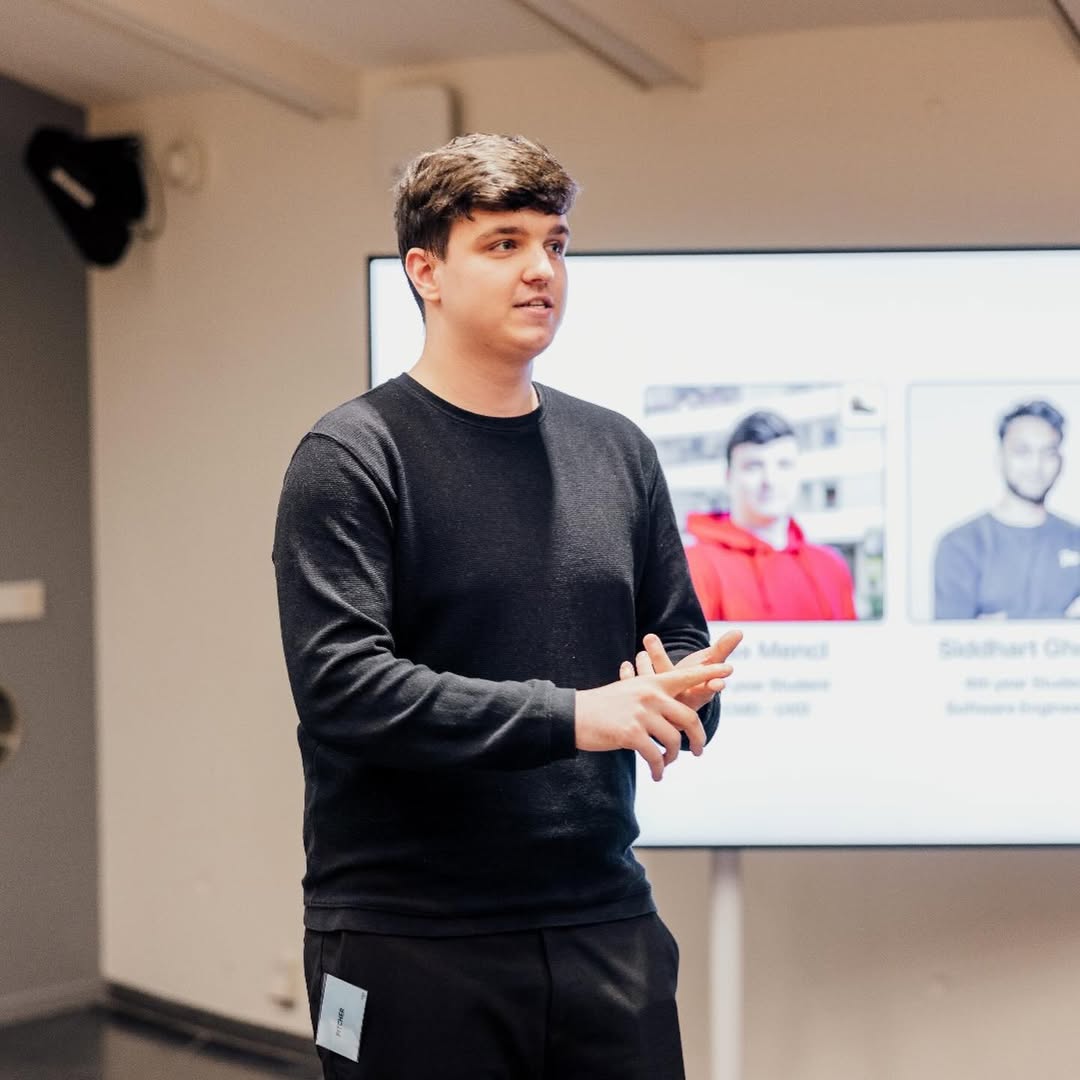
The most memorable testing moment came from an unexpected place — THiNKFeST itself. We hosted our own session at the festival, putting the platform in front of real attendees in the exact environment it was built for. Watching people interact with something we'd designed, in real time, with real stakes — that's a kind of feedback you can't replicate in a studio. It gave us insights we wouldn't have found anywhere else, and fed directly into the final rounds of iteration before launch.
Reflection
This internship was where I learned what it actually means to work as a designer in a professional setting. Being embedded in a Scrum team, collaborating daily with developers and a product owner, and working directly with a real client — it was a completely different experience from school projects, and it accelerated my growth fast.
Building something from scratch is exciting, but it also demands a lot of discipline. Without an existing product to react to, you have to be intentional about every decision — and constantly validate that you're building the right thing. The research-heavy approach we took gave us the confidence to move forward, knowing our decisions were grounded in real user needs.
Seeing the website go live and used at the first-ever THiNKFeST in 2024 was one of those moments that reminds you why this work matters.