
LLO Caribbean
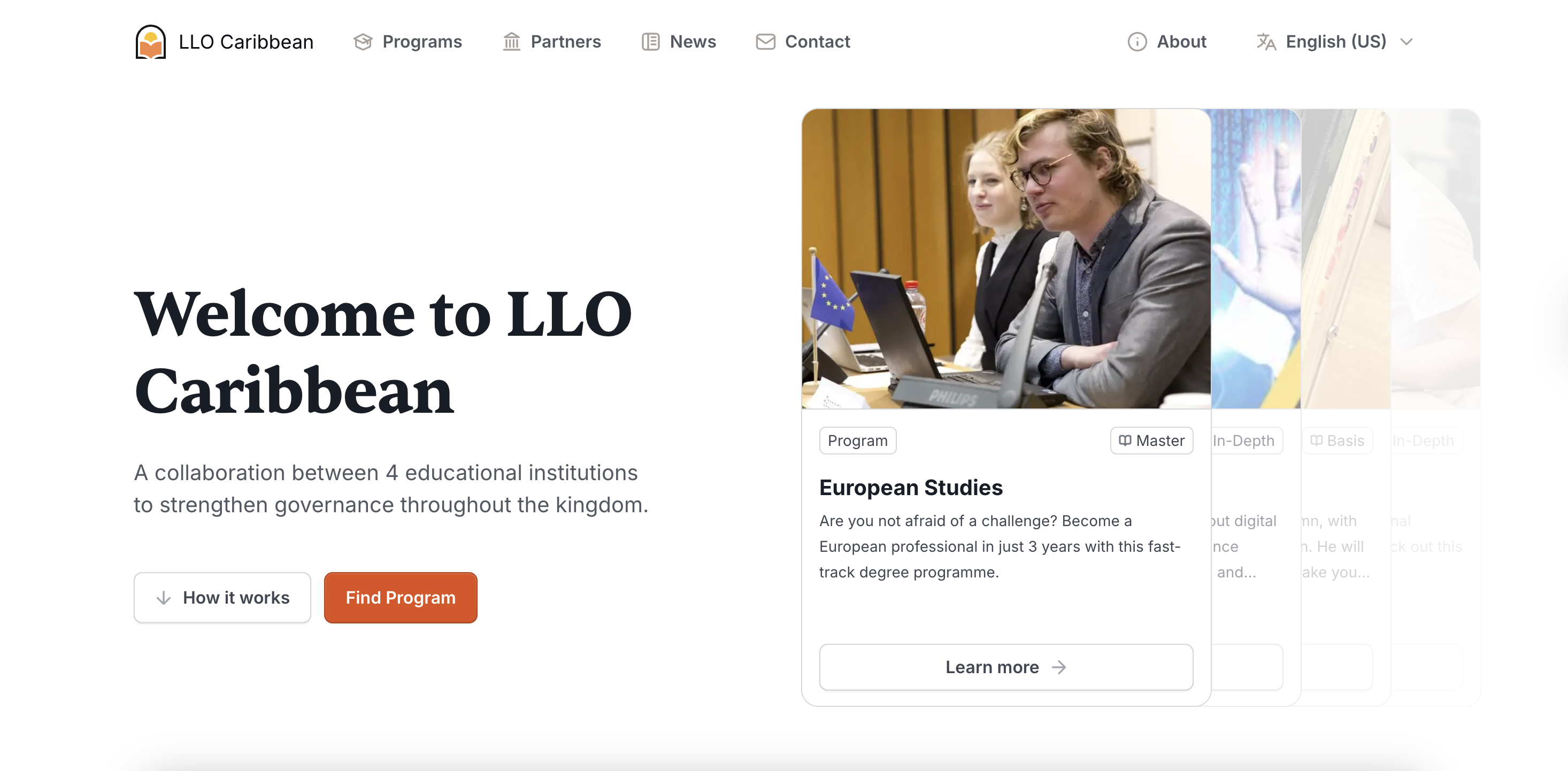
About the Project
In a strategic partnership with  The Hague University of Applied Sciences, Utrecht University,
  the University of Curaçao, and
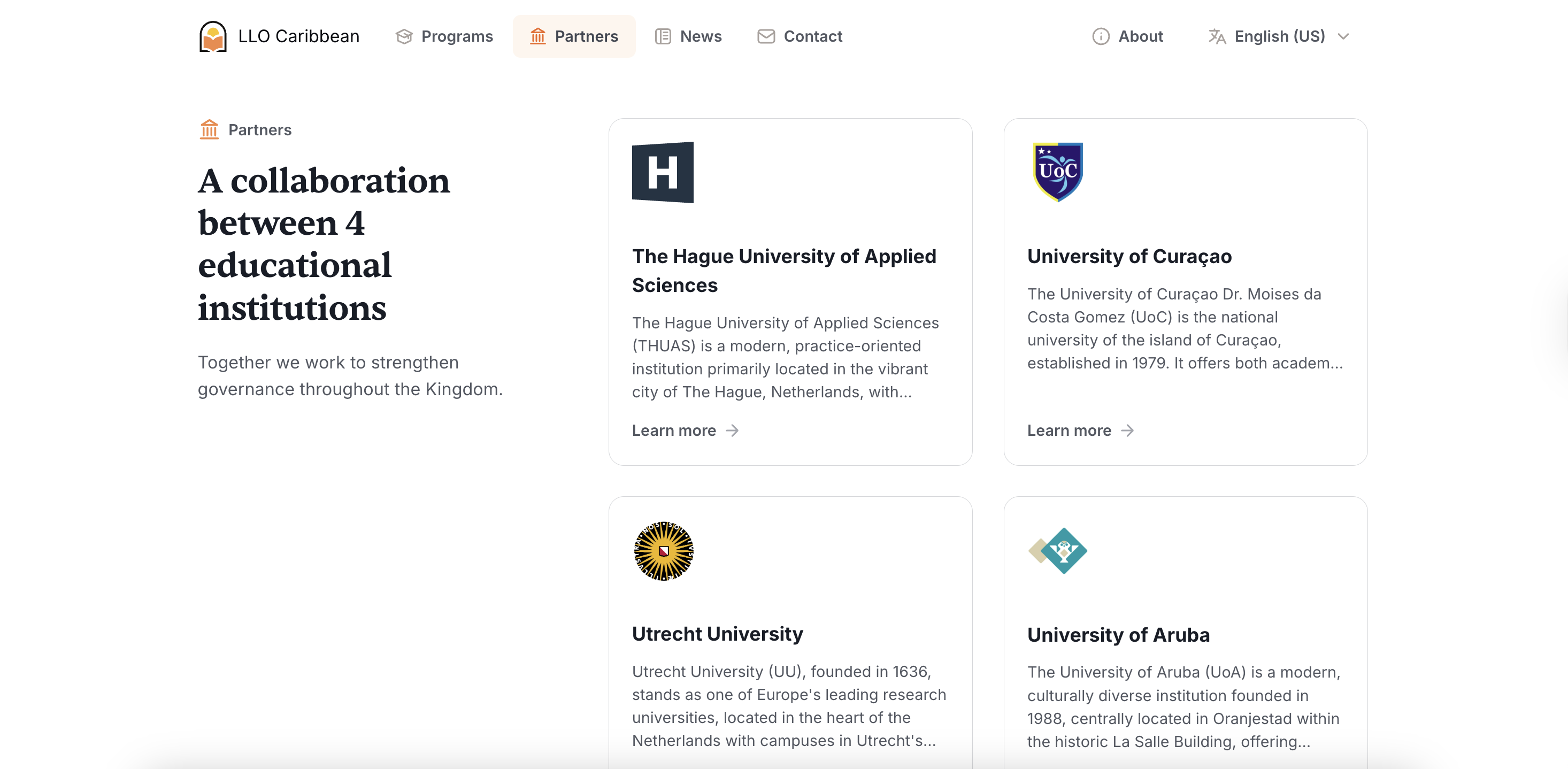
  the University of Aruba, we were commissioned to design and develop a comprehensive digital ecosystem for regional education. Our objective was to create a unified "Lifelong Learning" (LLO) portal that bridges the geographical gap between the Netherlands and the Caribbean.
The resulting platform serves as a sophisticated marketplace and management system where these four institutions can seamlessly publish, manage, and track professional courses.
Beyond a simple directory, the solution provides a streamlined application pipeline for users, integrated search and comparison tools, and a robust backend designed to handle cross-institutional data. This digital infrastructure empowers the region by making high-level academic and professional training more accessible than ever before.
Design Process
To ensure a high-quality, scalable result for such a diverse group of stakeholders, we adopted a Double Diamond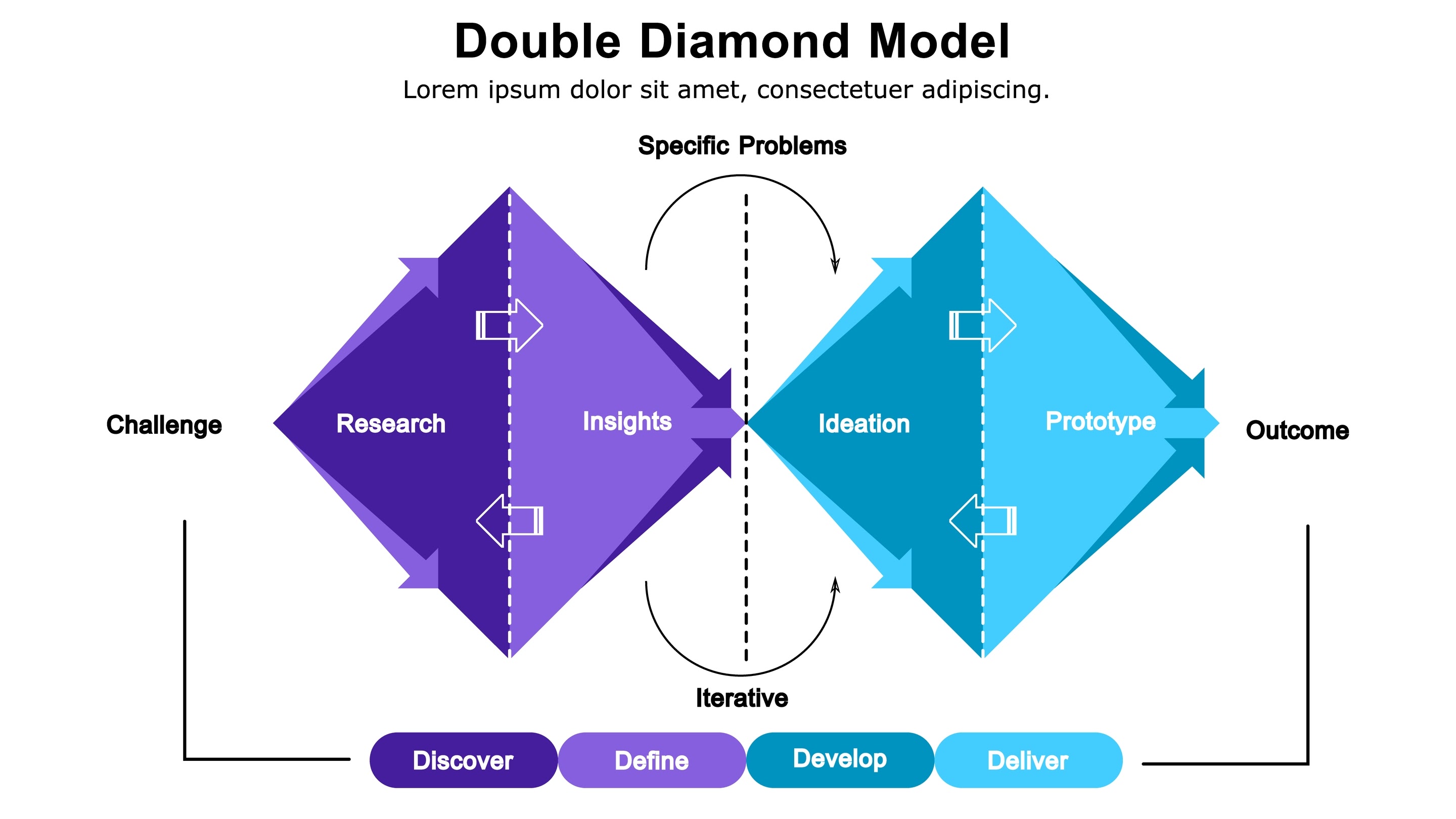 design methodology integrated within a Waterfall framework
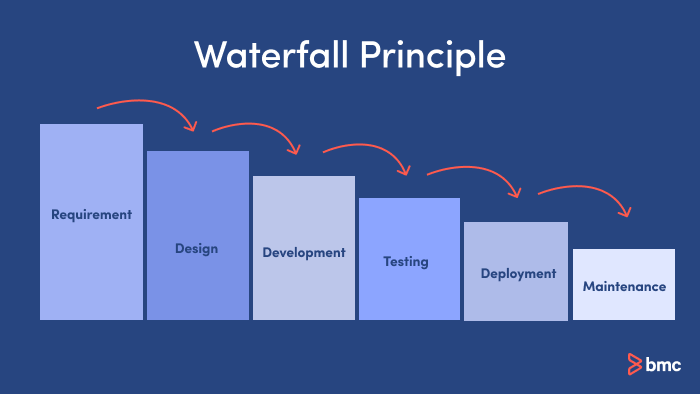 . This approach allowed us to maintain a structured project timeline while ensuring deep exploration of the user's needs. The journey began with extensive discovery sessions, where we met with representatives from all four universities to translate their collective vision into a concrete set of functional requirements.
Research
Our research phase began with a series of Stakeholder Discovery Sessions involving academic and administrative leads from the four partner universities. The goal was to map out the unique requirements of each institution—from the University of Aruba's local enrollment needs to Utrecht University's data compliance standards. Through these interviews, we identified a primary friction point: the lack of a centralized, 'borderless' interface where courses from different regions could be compared and accessed with equal ease.
Ideation
During the ideation phase, we focused on translating our research insights into a tangible digital strategy. We held brainstorming sessions to tackle the primary challenge: How do we create a unified user experience for four distinct institutions with different branding and course structures? We explored various navigation models and 'course card' designs, eventually landing on a modular grid system. This allowed for a consistent look and feel across the LLO Caribbean platform while giving each university—from Utrecht to Aruba—the space to showcase their unique program offerings and cultural identity.
Prototyping
We deliberately started with Lo-Fi wireframes—layouts that focused strictly on structure, hierarchy, and navigation rather than aesthetics. By stripping away colors and images, we were able to:
- Define the Information Architecture: We mapped out how hundreds of courses from four different regions could be filtered and categorized without overwhelming the user.
- Streamline User Flows: We visualized the "Apply Now" journey, ensuring that the transition from a course page to the enrollment form was frictionless.
- Foster Psychological Safety for Feedback: Because the designs looked "unfinished," our clients felt more comfortable suggesting major structural changes early on, which prevented costly redesigns later in the development phase.
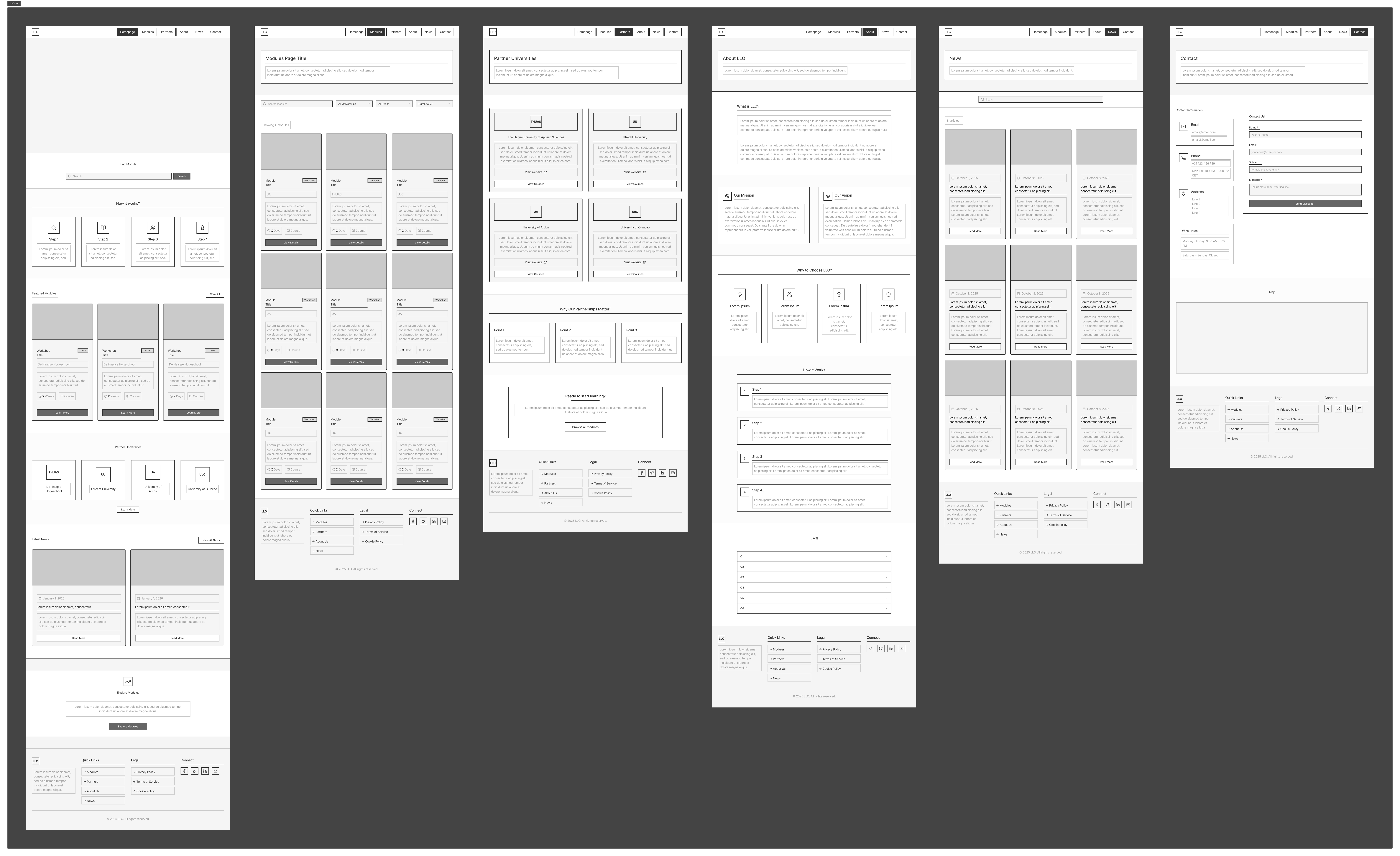
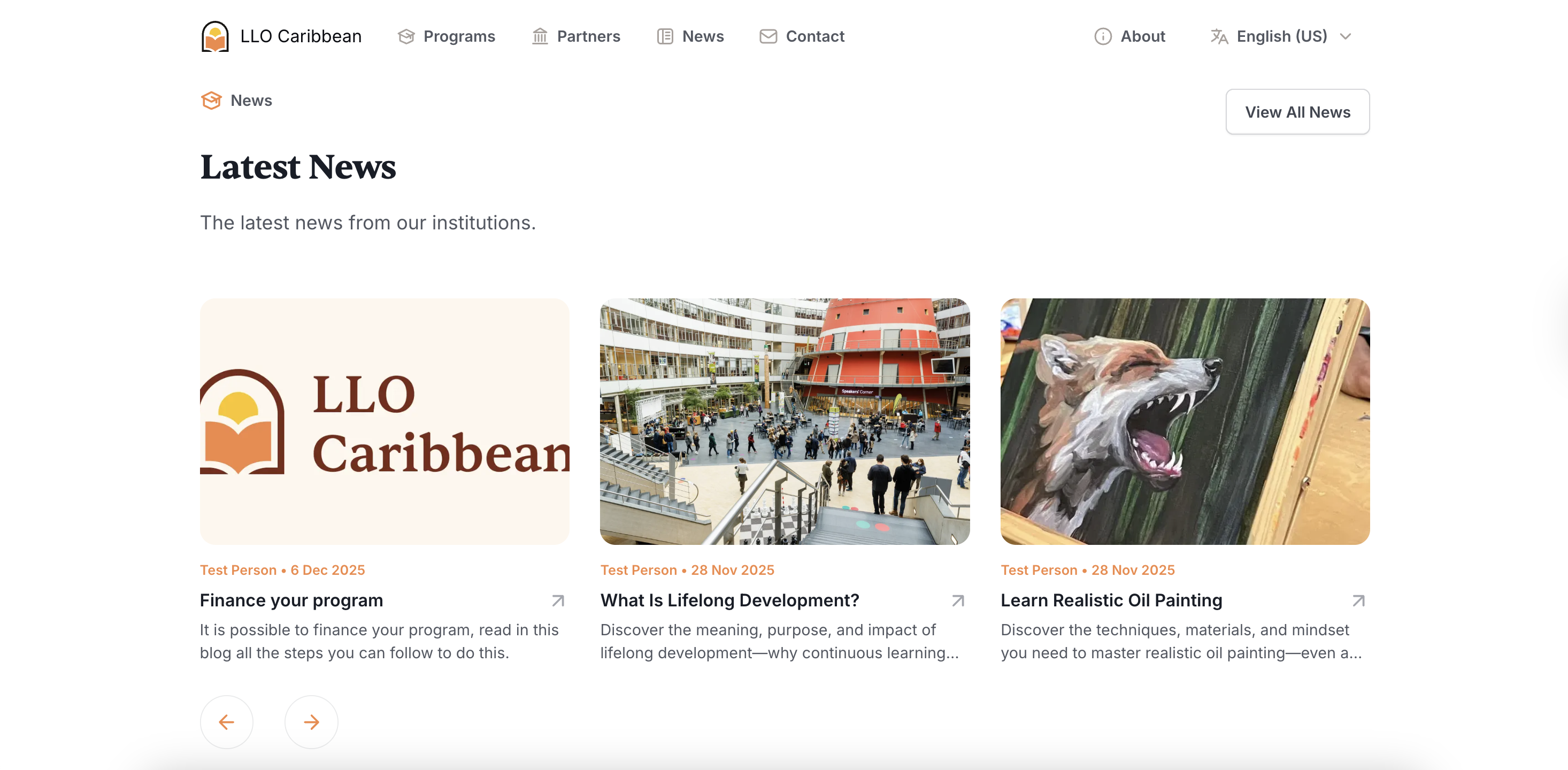
Lo-Fi wireframes showing the structural layout and navigation flow
Our process was highly iterative. We hosted regular design walkthroughs with the project leads from the Dutch and Caribbean universities. Using Figma's prototyping tools, we created clickable paths that allowed stakeholders to "feel" the navigation before a single line of code was written.
Through multiple rounds of feedback, we refined the placement of key features like the course comparison tool and the regional search filters. This collaborative loop ensured that by the time we moved to High-Fidelity design, the core structure of the LLO Caribbean platform was already approved and battle-tested by the people who would use it most.
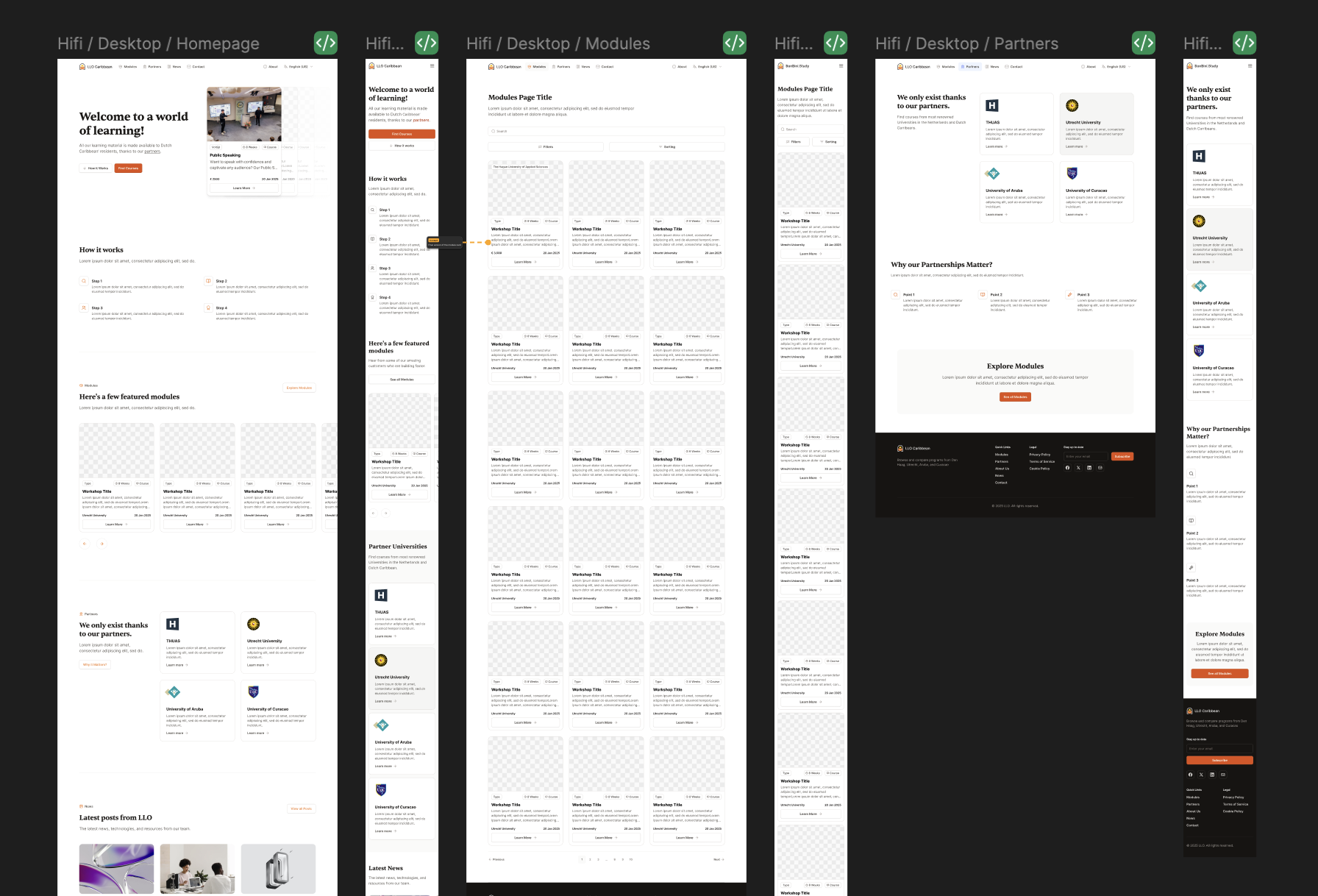
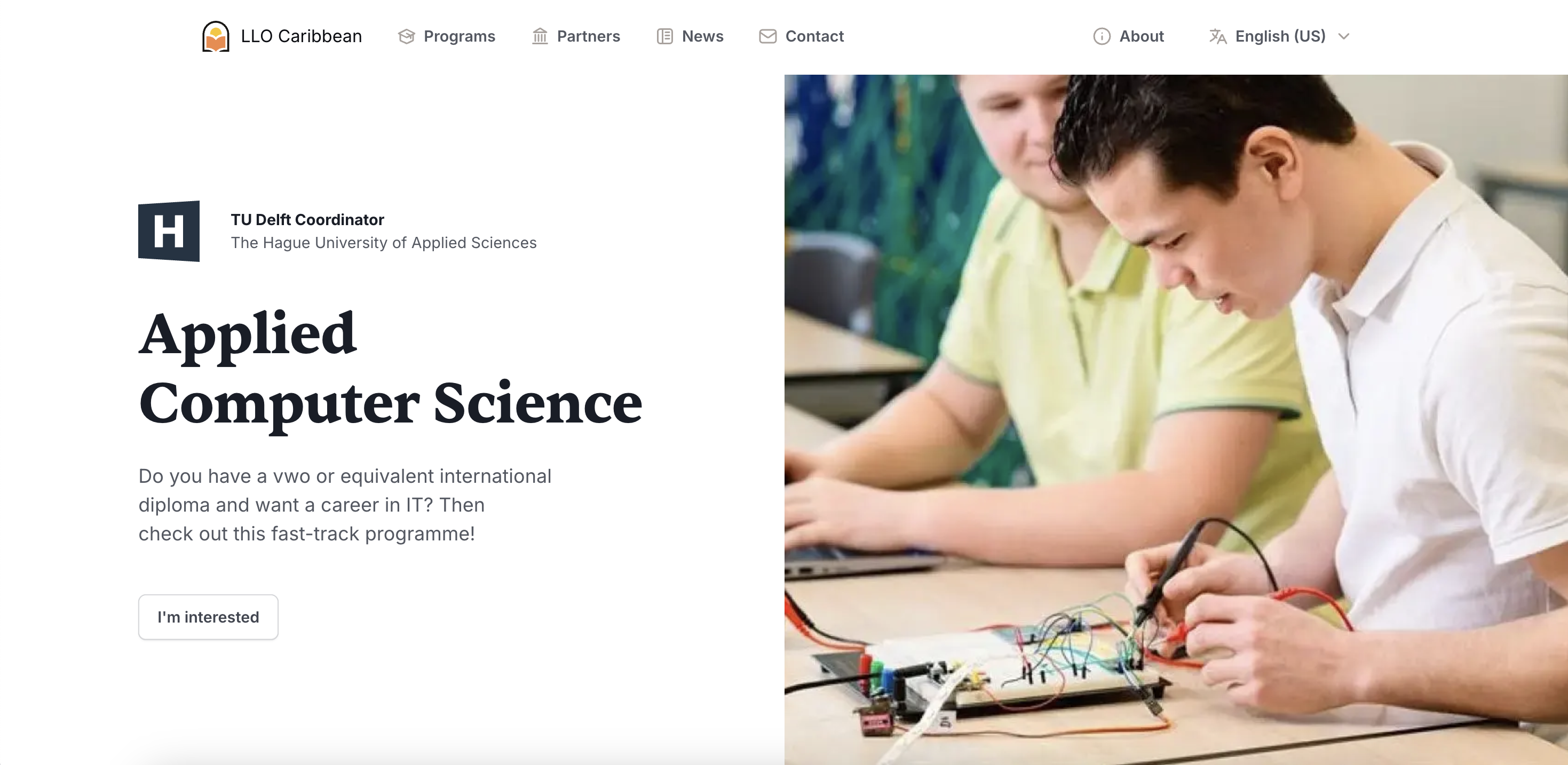
High-fidelity design mockups showcasing the final visual design and user interface
Testing
To ensure the platform was ready for a complex, multi-institutional launch, we conducted targeted testing sessions with key user groups and stakeholders. This phase was essential for verifying that the technical infrastructure could handle the diverse course data from four different universities while maintaining a smooth, intuitive interface.
Figma Prototype
Interactive Figma prototype - drag to explore the design
Reflection
Taking this platform from a blank canvas to a full-scale launch was a defining moment for our team. As this was our first major venture as graduates, the stakes felt incredibly high. Managing the "0 to 100" journey under tight deadlines forced me to evolve quickly from a designer into a strategist. I realized that leadership in this context wasn't just about making aesthetic choices; it was about maintaining a clear vision while navigating the logistical complexities of a transatlantic project.
The most profound lesson I took away, however, was the necessity of cultural humility in design. Even with a structured process, I learned that a digital solution for the Caribbean requires more than just technical functionality—it requires an awareness of regional nuances and local context. This experience taught me to be more inclusive in my thinking, ensuring that the interface didn't just feel like a Dutch export, but a shared space that respected the identity of every island involved.
Building this as a new team meant we had to learn the "art of the pivot" in real-time. It sharpened my ability to translate client feedback into actionable iterations without losing momentum.